


As security threats and asset protection demands surge in 2026, the role of storage vaults has never been more critical. Businesses and individuals alike are seeking innovative solutions to safeguard valuable goods with maximum efficiency and reliability.
This guide delves into the latest trends in storage vaults, exploring advanced materials, cutting-edge security features, and best practices for selecting the right solution. Whether you are navigating compliance, optimizing logistics, or protecting sensitive items, our expert insights will empower you to make informed decisions and elevate your security strategy.
In today's fast-evolving logistics and asset management landscape, storage vaults have become essential for organizations prioritizing security and efficiency. At their core, storage vaults are robust, enclosed containers designed to safeguard goods during transport, warehousing, or long-term storage. Their primary function is to provide secure, organized, and accessible protection for valuable or sensitive items across a range of industries.
Storage vaults stand apart from crates, pallets, and other containers due to their reinforced construction and enhanced security features. Unlike standard crates and boxes, which focus mainly on basic containment, storage vaults are engineered for maximum durability, often incorporating locking mechanisms, stackable designs, and custom sizing. For a deeper look at how vaults differ from other solutions, explore this collection of crates and storage boxes, which highlights the variety of available storage options.
Industries leverage storage vaults for a wide spectrum of applications. In warehousing, vaults streamline inventory management and optimize floor space. Logistics firms rely on them to protect high-value shipments during transit. Moving and storage providers use vaults to ensure client possessions remain safe from damage or loss. Sensitive sectors, such as medical, technology, and archival storage, depend on vaults to maintain compliance with regulations and safeguard irreplaceable assets.
The need for secure storage vaults has intensified in 2026, as organizations face rising risks related to theft, environmental damage, and evolving compliance standards. Enhanced security features, such as tamper-evident seals, fire-resistant materials, and integrated monitoring technology, are now standard in modern vaults. These improvements address not only physical threats but also regulatory requirements for sectors like pharmaceuticals and food distribution.
Recent advancements in vault design have further expanded their utility. Modern storage vaults incorporate features like 3HI and 4HI stacking, allowing facilities to maximize vertical space without compromising safety. Quick-access panels and modular construction improve handling efficiency, making it easier for teams to load, unload, and relocate goods as needed.
Data from recent industry reports show a significant increase in storage vault adoption. For example, logistics and manufacturing sectors have reported a 25% year-over-year rise in vault usage, driven by the need for scalable, secure, and compliant storage solutions. Retailers and archival facilities are also turning to specialized vaults for long-term preservation of inventory and records.
Practical examples showcase the versatility of storage vaults. Households use them for seasonal goods and valuable belongings. Equipment warehousing operations depend on vaults for heavy machinery or delicate instruments. Archival storage facilities rely on vaults with climate control and advanced security to protect historical documents.
Ultimately, storage vaults play a critical role in safeguarding assets against modern threats while supporting operational efficiency. By understanding their core functions and industry applications, businesses can make informed decisions about the best storage solutions for their evolving needs.
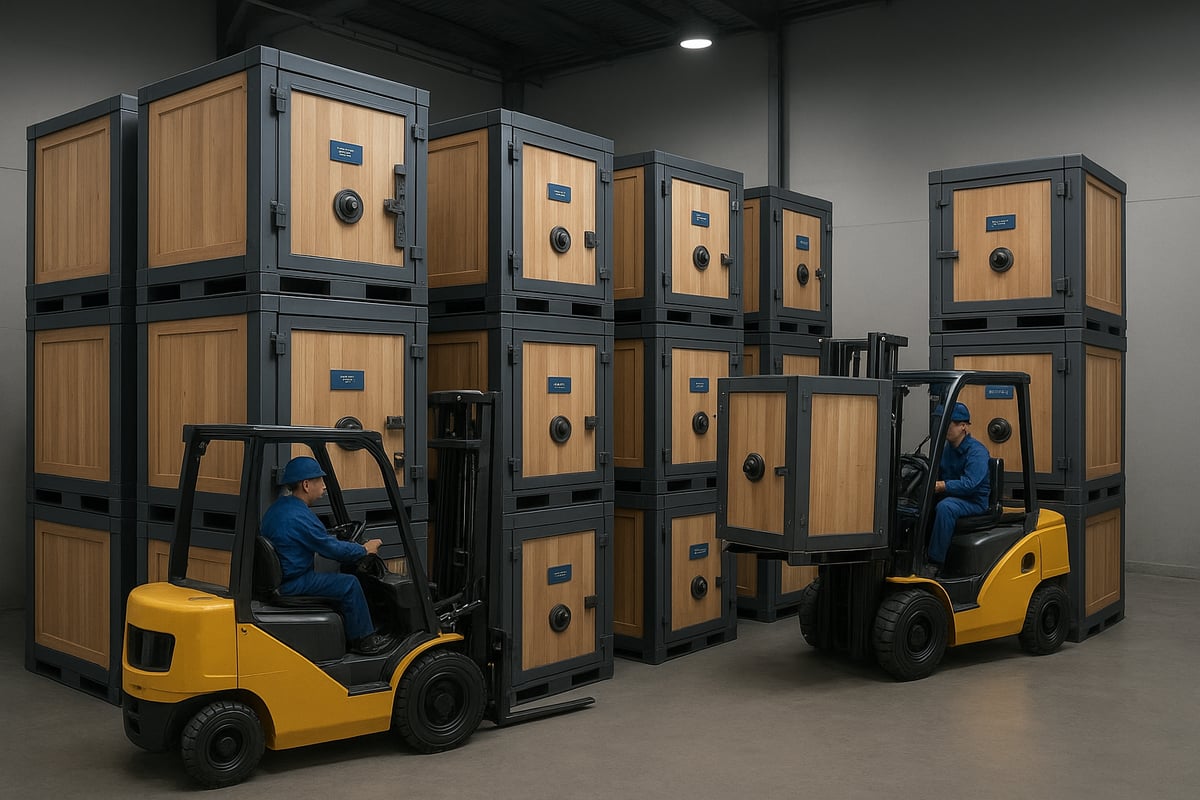
The landscape of storage vaults in 2026 is more diverse and innovative than ever. Businesses now have a wide array of storage vaults to choose from, each designed to meet specific needs for security, durability, and efficiency. Whether you require robust protection for sensitive goods or flexible solutions for dynamic inventory, understanding the available options is essential for making informed decisions.
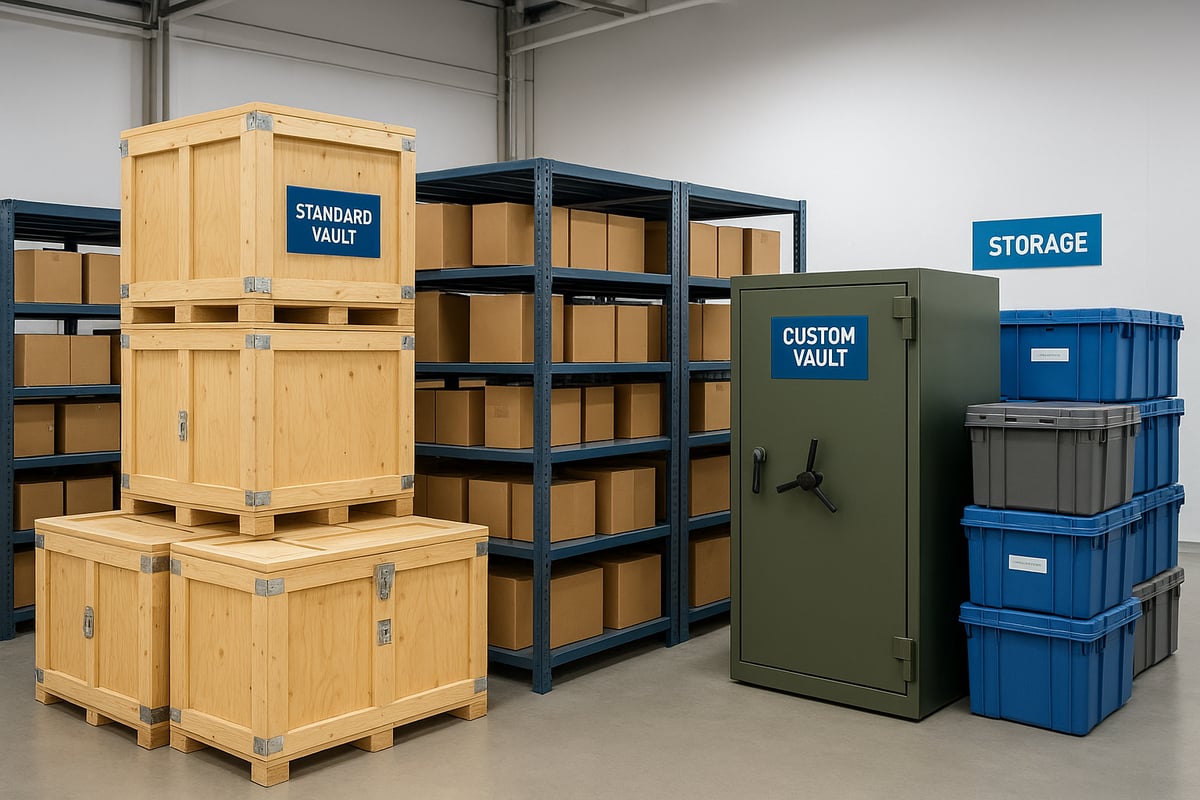
Wooden storage vaults remain a cornerstone for many industries due to their balance of strength, adaptability, and cost-effectiveness. Typically constructed from plywood with varying thicknesses such as 1/2", 3/8", or 5/8", these vaults are assembled using fasteners like clinch nails or staples, ensuring robust structural integrity.
Recent advancements in wooden storage vaults include reinforced panels for heavy-duty use and improved stacking capabilities, such as 3HI and 4HI stacking, which maximize warehouse space. Standard sizes, like 8-foot and 10-foot vaults, are commonly used for household goods, while specialized models accommodate unique items.
Customization is also a key feature. Many providers offer options for tailored dimensions, additional bracing, or reinforced bases. For more details on construction methods and applications, explore this Wooden pallets and crates resource.
Wooden storage vaults are favored for their:
However, they may be heavier than plastic alternatives and require proper treatment for export compliance.
Metal storage vaults, most commonly made from steel, deliver exceptional durability and are ideal for long-term or high-value storage. Their resistance to impact and tampering makes them a preferred choice in manufacturing, export, and industrial applications. Metal vaults can be designed for stackability, facilitating efficient use of vertical warehouse space.
Plastic storage vaults are gaining traction due to their lightweight nature and resistance to weather, moisture, and pests. These vaults are reusable and often feature quick-assembly mechanisms, making them suitable for fast-moving logistics environments. Hybrid storage vaults, combining elements of wood, metal, and plastic, are also on the rise, offering a blend of the best attributes from each material.
Here’s a quick comparison:
| Material | Durability | Weight | Environmental Impact | Typical Use Cases |
|---|---|---|---|---|
| Metal | High | Heavy | Recyclable | Export, equipment, pharma |
| Plastic | Moderate | Light | Reusable, recyclable | Food, pharma, tech |
| Hybrid | High | Moderate | Mixed | Custom, sensitive goods |
Innovations such as modular vault designs and integrated RFID tags are making these storage vaults smarter and more adaptable to evolving industry requirements.
Custom and specialized storage vaults provide tailored solutions for unique storage challenges. Businesses dealing with oversized, fragile, or high-value items often require vaults with non-standard dimensions or enhanced features. Examples include sofa storage vaults, archival containers for document preservation, and equipment-specific containers with added padding or climate control.
Customization options can involve:
The demand for specialized storage vaults is growing, especially in sectors such as technology, medical, and art logistics. These vaults ensure that sensitive or valuable items receive the exact level of protection required, reducing the risk of loss or damage during storage and transit.
By understanding the strengths and applications of each type of storage vaults, businesses can align their storage strategies with operational goals and industry standards.
Modern storage vaults face an increasingly complex threat landscape. In 2026, theft, tampering, and environmental incidents are more prevalent than ever. Industries rely on storage vaults to safeguard goods from unauthorized access, physical damage, and regulatory noncompliance. Companies must anticipate new risks, including sophisticated break-in attempts and evolving compliance standards. As a result, advanced security features have become central to the design and use of storage vaults.
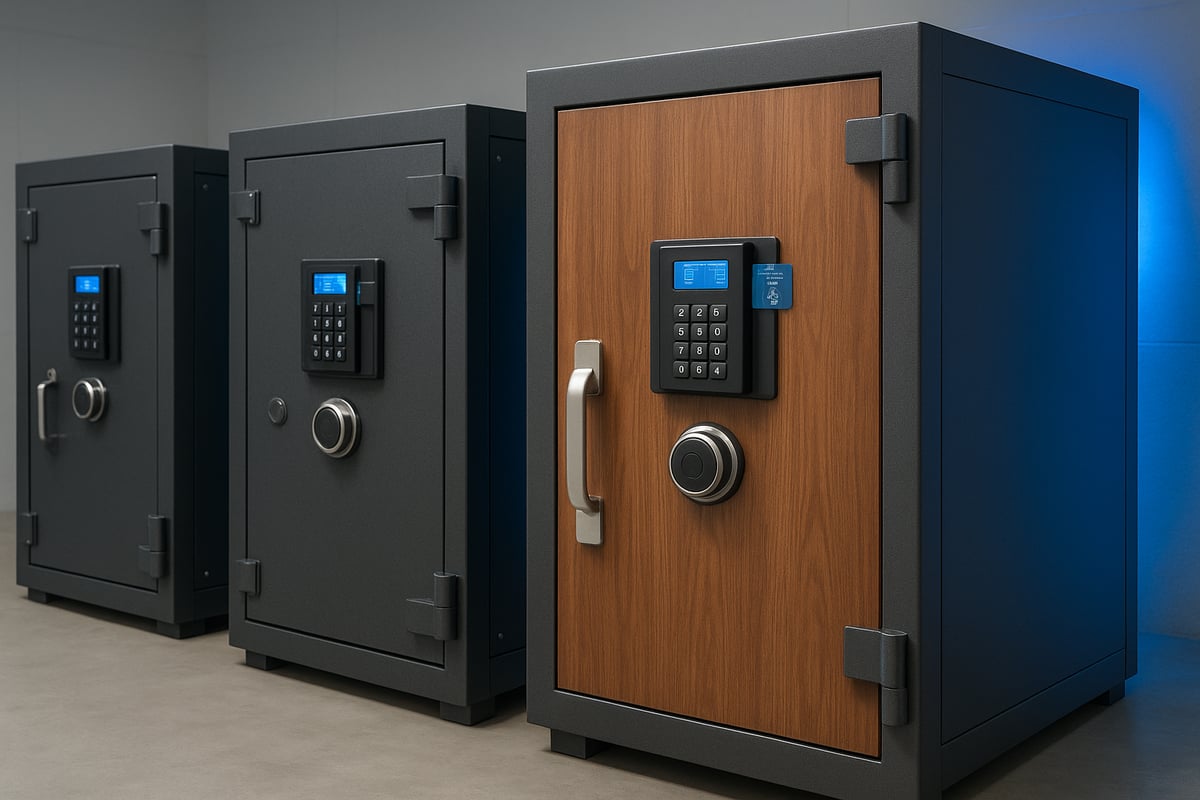
Physical security is the foundation of asset protection. Today’s storage vaults are built with upgraded plywood thicknesses, reinforced steel corners, and glued or bolted joints. These construction choices enhance resistance to forced entry and accidental impacts. Many storage vaults now feature tamper-evident seals and high-grade locking systems. Some designs offer double-panel doors or hidden hinges to further deter unauthorized access.
In addition to theft prevention, storage vaults are engineered for fire, water, and pest resistance. Treatments such as waterproof coatings, fire-retardant finishes, and integrated pest barriers help maintain integrity in harsh environments. The table below summarizes key physical innovations:
| Security Feature | Benefit | Typical Application |
|---|---|---|
| Reinforced panels | Increased break-in resistance | Warehousing, logistics |
| Glued/bolted bases | Enhanced structural stability | Export, heavy-duty storage |
| Tamper-evident seals | Quick detection of interference | Sensitive goods, archives |
| Fire/water treatments | Protection from environmental harm | Pharma, food storage |
Technology is transforming how storage vaults are managed and secured. Many solutions now integrate RFID tracking for real-time inventory visibility and access logs. IoT sensors monitor temperature, humidity, and unauthorized access, alerting operators instantly to anomalies. Compliance with standards like ISPM-15, food-grade, and pharmaceutical regulations is also critical. Vaults undergo specialized treatments and certifications to ensure legal and safe storage for sensitive items.
Recent advancements in secure storage, such as biometric access, smart monitoring, and AI-driven analytics, are redefining industry benchmarks. For a deeper look at these trends, visit Advancements in Secure Storage. These innovations help businesses reduce losses, streamline audits, and adapt to changing risk profiles.
Ultimately, the most secure storage vaults combine robust construction with cutting-edge technology. Businesses that invest in these features gain peace of mind, knowing their assets are protected against today’s most pressing threats.
In 2026, businesses increasingly rely on customization to get the most value from storage vaults. Off-the-shelf solutions often fall short when it comes to safeguarding unique assets or adapting to changing inventory. Custom storage vaults deliver tailored protection, efficiency, and peace of mind. By designing vaults around specific requirements, organizations can better safeguard sensitive, oversized, or high-value items, all while optimizing space and workflows.
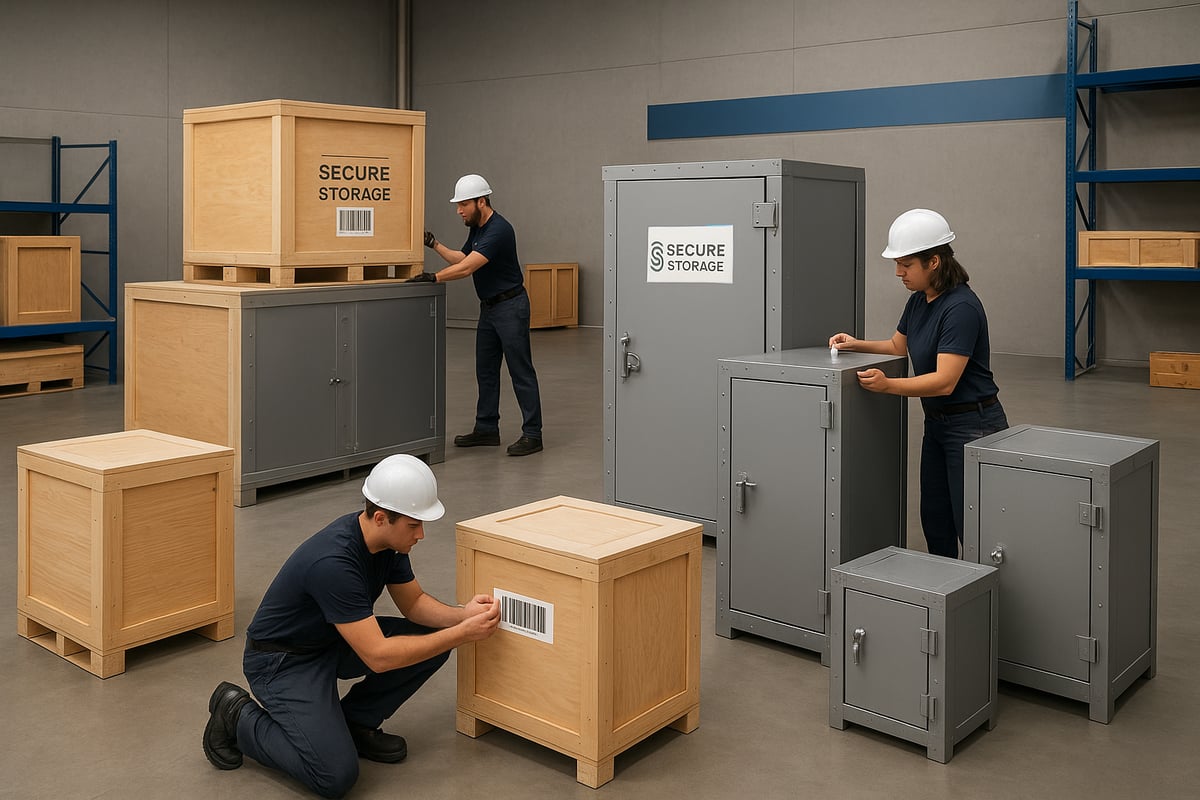
Customization options for storage vaults are extensive. Businesses can choose reinforced construction, such as glued panels or bolted bases, for extra strength. Selecting thicker plywood or combining materials like wood, metal, and plastic further enhances durability. Flexible sizing ensures that even awkward or oversized items are stored securely. Modular vault designs allow organizations to adjust configurations as inventory needs change, supporting both short-term projects and long-term growth.
Branding and labeling features are also available with custom storage vaults. Companies may add custom logos, color coding, or barcodes to streamline inventory management and promote brand identity. Fast assembly and disassembly options minimize downtime during busy operations. For example, industries like glass manufacturing, medical device storage, and agriculture benefit from vaults designed for fragile, sterile, or climate-sensitive items. These sectors require solutions that protect contents and simplify tracking.
Adoption of custom storage vaults continues to rise, driven by measurable ROI and operational efficiency. Studies show that businesses investing in tailored vaults experience reduced loss rates and improved space utilization. Many organizations turn to custom packaging solutions providers for expert guidance and product variety. By choosing the right custom features, companies gain a competitive edge, ensuring assets remain secure, accessible, and well-organized.
The landscape for storage vaults is rapidly evolving as new challenges and opportunities emerge across industries. In 2026, demand for secure, modular storage vaults is rising, driven by the explosive growth of e-commerce, global logistics, and shifting supply chain requirements.
Businesses are seeking flexible solutions that maximize space, streamline operations, and protect assets from increasingly sophisticated threats. The push for greater efficiency means that stackable and modular storage vaults are becoming the norm in modern warehouses and distribution centers.
Smart technology integration is also reshaping the market. Innovations such as IoT sensors, automated inventory systems, and remote monitoring are now essential features. These technologies offer real-time visibility into the condition and location of storage vaults, enabling companies to respond quickly to temperature changes, unauthorized access, or other risks.
Sustainability remains a top priority. Manufacturers are investing in eco-friendly materials, including recycled plastics and responsibly sourced wood, to reduce environmental impact. Reusable and recyclable storage vaults are gaining traction, especially among organizations focused on long-term lifecycle management and green certifications.
Market analysts predict steady growth for the storage vaults sector. According to the 2026 Self-Storage Industry Outlook, the industry is set to expand as technology adoption accelerates and customer expectations continue to rise. Logistics companies are leading the way by upgrading to smart, adaptable vaults that support automated handling and seamless inventory tracking.
Regulatory pressures are also shaping the future of storage vaults. Compliance with safety, export, and industry-specific standards is driving innovation in fire, pest, and moisture resistance. Companies are proactively seeking solutions that not only meet current requirements but also anticipate future regulatory changes.
Looking ahead, the next generation of storage vaults will likely offer even greater customization and connectivity. Expect to see further advances in automation, material science, and digital integration, empowering businesses to secure and manage their assets with unprecedented efficiency and control.
Selecting the best storage vaults for your business in 2026 requires a thoughtful, methodical approach. The right solution will protect your assets, streamline operations, and deliver long-term value. Follow these steps to make an informed decision tailored to your unique requirements.
Start by evaluating exactly what you plan to store. Consider the volume, weight, and sensitivity of your items. Are you storing household goods, industrial equipment, or sensitive materials? Estimate the total cubic footage and the average weight per vault. Also, think about how frequently items will be accessed or moved.
For example, archival storage may require climate control, while logistics operations need vaults that handle heavy stacking. By defining these parameters early, you ensure your storage vaults fit both current and future needs.
Next, select the optimal material. Wooden storage vaults offer strength and customization, while metal vaults provide maximum durability for heavy-duty or long-term use. Plastic and hybrid options deliver lightweight, weather-resistant solutions ideal for export or sensitive goods.
If you are interested in plastic or hybrid solutions, review this Plastic pallets overview for detailed insights into plastic storage products and their advantages in modern supply chains.
Use this table to compare materials:
| Material | Durability | Weight | Cost | Best For |
|---|---|---|---|---|
| Wood | High | Moderate | $ | Versatile storage, customization |
| Metal | Very High | Heavy | $$$ | Long-term, industrial use |
| Plastic | Moderate | Light | $$ | Export, weather-sensitive items |
| Hybrid | High | Moderate | $$-$$$ | Specialized applications |
Security is paramount. Assess the locking mechanisms, tamper-evident seals, and construction reinforcements of each option. Look for features like glued joints, bolted bases, or reinforced panels. For high-value or regulated goods, consider fire, water, and pest-resistant treatments.
Modern storage vaults increasingly integrate technology such as RFID tags and IoT sensors to monitor access, temperature, and humidity. These features help prevent theft, tampering, and environmental damage.
Regulations vary by industry and region. If you export goods, ensure your storage vaults meet ISPM-15 heat treatment standards. For food and pharmaceutical items, select vaults built with certified materials and finishes that prevent contamination.
Verify that your chosen solution aligns with all applicable safety and environmental regulations. Non-compliance can lead to delays, fines, or product loss.
Standard storage vaults are cost-effective and readily available, often suitable for general warehousing or moving needs. However, custom or specialized vaults may be necessary for irregularly shaped, oversized, or sensitive items.
Custom solutions allow you to specify dimensions, reinforcement methods, and branding options such as company logos, color coding, and barcodes. This flexibility can improve handling efficiency and asset tracking.
While upfront costs are important, focus on total value. Consider the lifespan, maintenance, and potential for reuse. Investing in high-quality or tailored storage vaults can reduce damage, improve workflow, and lower replacement rates—providing significant savings over time.
Bulk purchasing or long-term contracts may offer additional discounts. Compare supplier quotes, factoring in warranties and service agreements.
Choose reputable suppliers with a proven track record in your industry. Request references or case studies that demonstrate reliable performance. Review warranty terms, service support, and availability of replacement parts.
A good supplier should provide guidance on selecting, maintaining, and optimizing your storage vaults for maximum efficiency.
Use this checklist to finalize your decision:
By following these steps, you can confidently select storage vaults that deliver security, efficiency, and long-term value tailored to your business.

