
Did you know that over 30% of all pallets in the U.S. are a single, standard size, while dozens of pallet standards keep global supply chains moving? Understanding standard pallet size is essential for logistics, warehousing, and international shipping success in 2025.
Choosing the right pallet size increases efficiency, lowers costs, and helps companies stay compliant across industries and borders. This guide will help you navigate every aspect of standard pallet size, covering U.S. and global standards, construction materials, industry-specific needs, regulations, and tips for making the best choice.
Whether you manage a warehouse, ship products worldwide, or want to optimize your operations, this article gives you the knowledge and confidence to handle pallets in 2025.
What is a Standard Pallet Size?
Understanding the standard pallet size is crucial for anyone involved in logistics, warehousing, or shipping. A standard pallet size ensures compatibility, efficiency, and safety throughout the supply chain. By aligning with recognized dimensions, businesses can streamline operations and avoid costly delays.
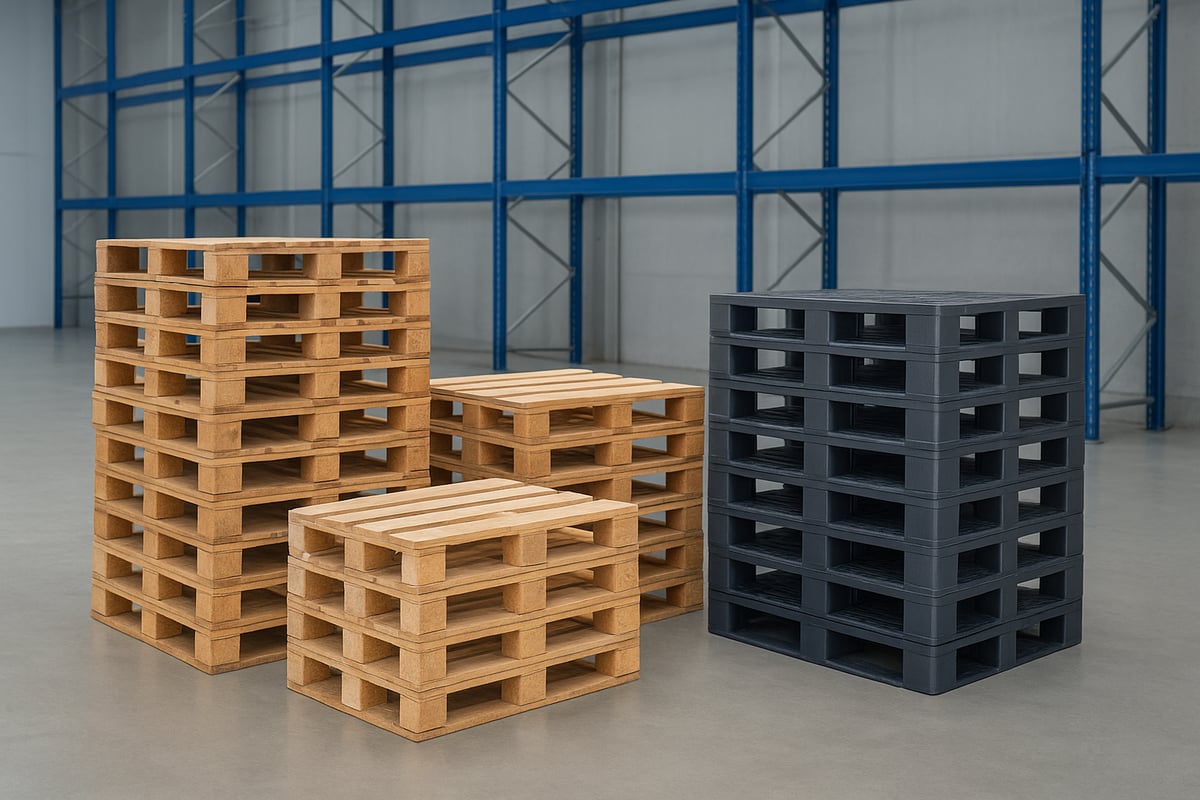
Definition and Importance of Standardization
A standard pallet size refers to a set of dimensions and construction guidelines widely accepted within logistics and supply chain industries. Standardization allows pallets to move seamlessly between warehouses, trucks, and shipping containers. This uniformity reduces handling errors and maximizes storage space.
Using a standard pallet size also improves safety during stacking and transport. Organizations such as the Grocery Manufacturers Association (GMA), European Pallet Association (EPAL), and the International Organization for Standardization (ISO) play major roles in defining these standards. The 48"x40" pallet, for example, is used in over 30 percent of U.S. shipments, showing how standardization drives efficiency.
The 48"x40" GMA Pallet: The U.S. Standard
The 48"x40" GMA pallet is the most recognized standard pallet size in the United States. It features deck boards that are 3.5 inches wide and 5/16 inch thick. This pallet is favored by grocery, fast-moving consumer goods, and warehousing industries due to its compatibility with standard U.S. trucks and warehouse doors.
It can support loads up to 4,600 pounds and weighs around 37 pounds on average. More than 30 percent of new pallets produced follow this standard. For a detailed breakdown of its specifications and industry applications, see the GMA pallet dimensions and usage.
Other Common U.S. Pallet Sizes
While the 48"x40" is the leading standard pallet size, several others serve key industries:
| Pallet Size | Main Use | Avg. Weight | Load Capacity | Entry Type |
|---|---|---|---|---|
| 42"x42" | Dairy | 35 lbs | 3,700 lbs | Four-way |
| 48"x48" | Drum/Chemicals | 40 lbs | 4,000 lbs | Four-way |
| 36"x36" | Beverage | 30 lbs | 2,800 lbs | Two-way |
| 44"x56" | Can/Glass | 50 lbs | 4,500 lbs | Four-way |
Two-way entry pallets allow forklift access from two sides, while four-way pallets allow access from all sides, improving maneuverability. Selecting the right standard pallet size and entry type directly impacts transport efficiency and handling safety.
Global Standards Overview
Globally, several standard pallet size formats are recognized. The Euro pallet (800x1200mm) is widely used in Europe, while the UK block pallet (1200x1000mm) is common in the UK. Australia relies on the 1165x1165mm pallet, and much of Asia uses the 1100x1100mm size.
Metric measurements are standard outside the U.S., which uses imperial. These regional differences play a major role in international shipping and container optimization. Companies involved in global logistics must understand both local and international standard pallet size requirements to avoid costly inefficiencies.
The Role of Standardization in Modern Logistics
Adopting a standard pallet size streamlines operations across industries. These standards reduce damage during handling, cut transportation costs, and simplify automation processes. As a result, businesses benefit from smoother cross-border trade and improved supply chain performance.
Standard Pallet Sizes Around the World
Understanding the standard pallet size is crucial for anyone involved in logistics, warehousing, or international shipping. As global trade grows, knowing the key differences and overlaps in pallet standards across regions can help you optimize your supply chain and avoid costly mistakes.
North American Pallet Standards
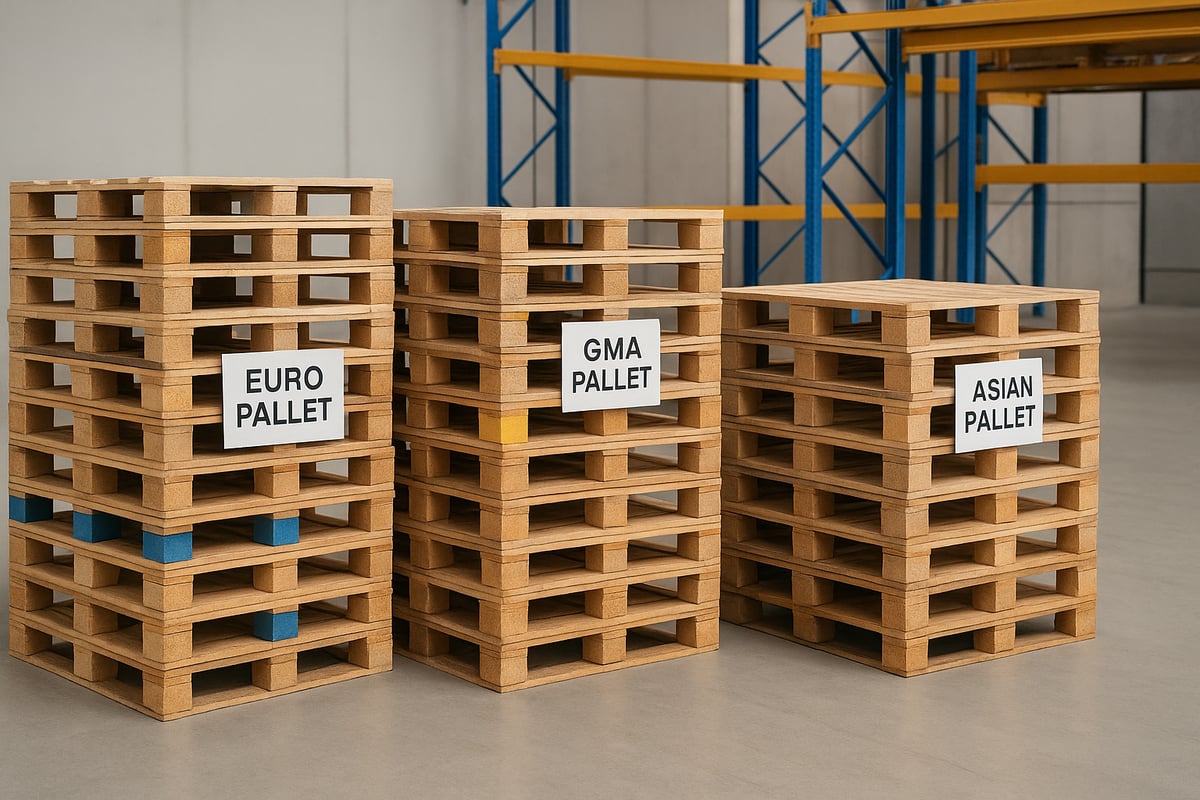
In North America, the standard pallet size is the 48"x40" GMA pallet, which dominates the grocery, warehousing, and fast-moving consumer goods industries. Other common sizes include 40"x40" for dairy, 36"x36" for beverage, and 48"x20" for retail displays. Automotive, chemical, and military sectors often use 48"x45", 48"x36", and 48"x42" pallets. Over 30 percent of all new pallets produced in the U.S. follow the 48"x40" standard, ensuring compatibility with racking systems and transport vehicles.
European Pallet Standards
The European market is led by the Euro pallet, also known as EUR 1, with a standard pallet size of 800x1200mm (31.5"x47.24"). Regulated by EPAL, this pallet is used in logistics, retail, and manufacturing, making up 21 percent of new pallet production in Europe. Other EPAL-approved sizes include EUR 2 (1200x1000mm), EUR 3 (1000x1200mm), and EUR 6 (800x600mm). The Euro pallet’s design supports efficient stacking, cross-border trade, and seamless movement through automated warehouses.
UK and Other European Variants
The UK primarily uses the block pallet, which has a standard pallet size of 1200x1000mm and is the go-to option for consumer goods and retail distribution. The EUR 3 industrial pallet (1000x1200mm) is favored for chemical and industrial use. Many European countries participate in pallet pooling systems, allowing standardized pallets to circulate among businesses, which increases supply chain efficiency and reduces environmental impact.
Asia-Pacific Pallet Standards
Asia-Pacific countries have their own preferences for standard pallet size, influenced by regional industries and export needs. In Japan and Korea, 1100x1100mm pallets are common, while China and India often use 1200x1000mm. These sizes are designed for compatibility with ISO shipping containers, streamlining international logistics. The region is seeing a steady shift toward adopting Euro and GMA sizes to align with global trade partners and simplify cross-border shipments.
Australian and African Standards
Australia utilizes a unique standard pallet size of 1165x1165mm, designed to maximize space in local racking and transport systems. However, as international trade expands, there is a growing trend toward using Euro and GMA pallets for export. In Africa, pallet standards are more diverse, but exporters increasingly favor Euro and GMA sizes to meet international requirements and optimize container use. This move toward harmonization supports smoother trade flows and compliance.
ISO Pallet Sizes: The Global Reference
The International Organization for Standardization (ISO) recognizes six main standard pallet size options: 1016x1219mm (40"x48"), 1067x1067mm (42"x42"), 1000x1200mm, 800x1200mm, 1165x1165mm, and 1100x1100mm. These standards were developed after World War II to facilitate global logistics and containerization. For detailed specifications and the impact of these standards on international shipping, consult Pallet dimensions and standardization. ISO standards help multinational companies reduce costs, minimize cargo damage, and increase efficiency by ensuring pallets fit seamlessly into global supply chains.
Pallet Materials and Construction Types
Selecting the right pallet material and construction is a key factor in supply chain efficiency and compliance with any standard pallet size. Different materials and builds directly impact durability, cost, load capacity, and suitability for automated systems. Let us explore the main options available in 2025.
Wooden Pallets: The Industry Standard
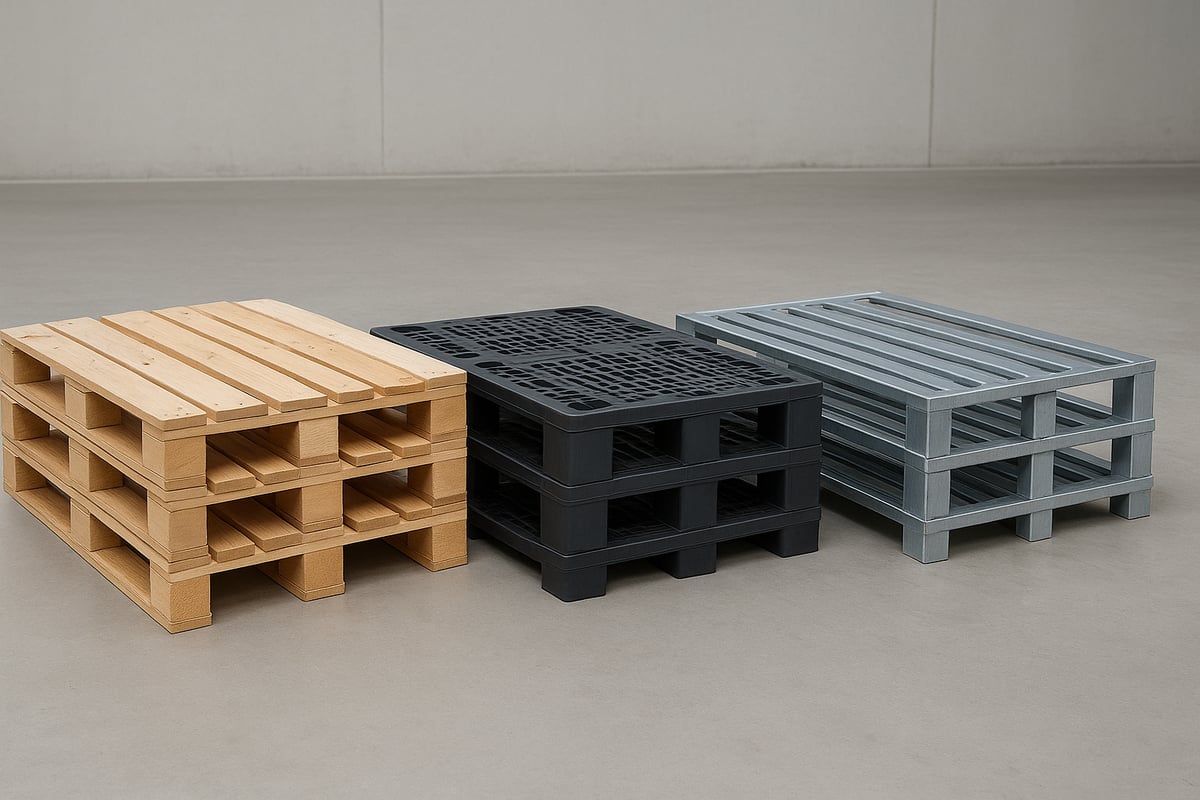
Wooden pallets remain the most widely used solution for any standard pallet size due to their affordability, strength, and versatility. Hardwood and softwood species such as oak, pine, and spruce provide a balance of durability and weight.
Wooden pallets are easy to repair, making them cost-effective for both one-way and multi-use supply chains. They are also recyclable, with many pallets repurposed as mulch or biomass at the end of their lifecycle. For heavy loads or export shipments, wood is often preferred because it handles weight and rough handling well, supporting the requirements of a standard pallet size.
Plastic Pallets: Advantages and Use Cases
Plastic pallets have gained popularity as an alternative to wood, particularly in industries that require high hygiene standards or repeated reuse. These pallets are lightweight, resistant to moisture, and easy to clean, which makes them ideal for food, pharmaceuticals, and export applications where a standard pallet size is essential.
A typical plastic pallet can support loads up to 4,000 lbs while weighing significantly less than wood. Their uniform construction ensures compatibility with automated systems and reduces product damage. Although the upfront cost is higher, plastic pallets often last longer, offering a strong return on investment for companies that use a standard pallet size in closed-loop systems.
Other Materials: Metal, Corrugated, Composite
Beyond wood and plastic, other pallet materials serve specialized needs in logistics. Metal pallets, made from steel or aluminum, are chosen for their exceptional durability and fire resistance, often in heavy-duty or long-term storage situations. Corrugated pallets, usually made from reinforced cardboard, are lightweight and intended for single-use export shipments.
Composite and hybrid pallets combine materials to meet unique requirements for strength, weight, or hygiene. For a comprehensive look at how these materials support various standard pallet size needs, see this Pallet materials and construction types overview.
| Material | Typical Uses | Load Capacity | Recyclable | Suitability for Standard Pallet Size |
|---|---|---|---|---|
| Wood | General, export | 2,500-4,600 lbs | Yes | Excellent |
| Plastic | Food, pharma, export | Up to 4,000 lbs | Yes | Excellent |
| Metal | Heavy-duty, storage | 4,000+ lbs | Sometimes | Good |
| Corrugated | One-way, export | 1,000 lbs | Yes | Good |
Pallet Construction Types
Pallet construction style is just as important as material when choosing a standard pallet size. The three primary types are stringer, block, and skid pallets.
Stringer pallets use parallel boards (stringers) for support and offer two-way or partial four-way forklift entry. Block pallets, reinforced with solid blocks at each corner and the center, provide full four-way access and are more robust for heavy loads. Skid pallets, with no bottom deck, are lightweight and cost-effective, often used for short-term or one-way shipping where a standard pallet size is still required.
Choosing the right construction type depends on your handling equipment, warehouse layout, and the weight of your typical shipments.
Pallet Decking and Modifications
Decking design and modifications further refine the utility of a standard pallet size. Solid deck pallets feature a continuous top surface, ideal for small or unstable goods. Slatted decks, with spaced boards, allow for ventilation and are lighter.
Double-face pallets have decks on both top and bottom for increased stability, while reversible designs can be used either way up. Non-reversible pallets have a single load surface. Winged and double-winged pallets extend the deck beyond the stringers or blocks, improving load distribution and making wrapping easier. Custom modifications, such as anti-slip coatings or reinforced corners, address industry-specific needs and help ensure compliance with the right standard pallet size.
Industry-Specific Pallet Requirements
Selecting the right standard pallet size is critical for meeting the unique demands of each industry. From grocery and beverage to chemicals and export, every sector relies on specific pallet dimensions, materials, and compliance factors to ensure efficiency and safety. Below, we break down the most common requirements and trends shaping standard pallet size selection in 2025.
Grocery and FMCG Pallets (GMA)
In the grocery and fast-moving consumer goods (FMCG) sector, the 48"x40" wood pallet remains the gold standard. This standard pallet size is recognized for its compatibility with U.S. racking, transportation, and automated systems. Grade A pallets are pristine, dry, and unbroken, while Grade B pallets have been repaired but still meet load and hygiene requirements.
Retailers demand pallets that are clean and free from contaminants, especially for food-grade logistics. The standard pallet size ensures seamless movement through supply chains, reduces product damage, and supports rapid shelf restocking. As a result, grocery and FMCG operations prioritize consistency and compliance above all.
Beverage, Dairy, and Can Pallets
Beverage distributors favor the 36"x36" standard pallet size for its efficient use of trailer space and ease of forklift maneuvering. Dairy products commonly ship on 40"x40" pallets, which provide stable support for stacked crates and cartons.
The can and glass industries require larger, heavy-duty pallets such as 44"x56" or 56"x44". These sizes are engineered to prevent rolling and shifting, with custom deck surfaces for added grip. Choosing the correct standard pallet size in these industries is essential to minimize breakage and maximize load density during transport.
Chemical and Automotive Pallets
Chemical manufacturers often rely on the CP (Chemical Pallet) series, which includes nine standard pallet size options, all regulated for safety and chemical resistance. For example, CP1 and CP3 are common for drums and bags, while CP9 handles bulkier loads.
The automotive industry typically uses 48"x45" pallets designed to accommodate specific component containers. These pallets must withstand high weights and repeated handling. Selecting a standard pallet size that aligns with regulatory and safety standards guarantees secure transport and efficient parts management.
Export Pallets and International Compliance
Export logistics demand strict adherence to international standards. Wood pallets must comply with ISPM-15, requiring heat treatment and official marking to prevent pest transmission. Many exporters use plastic or treated wood to meet these requirements.
The preferred standard pallet size for export matches ISO container dimensions, often 1200x1000mm or 1100x1100mm, ensuring optimal use of shipping space. Proper selection not only facilitates customs clearance but also reduces delays, fines, and rejected shipments in cross-border trade.
Specialty and Custom Pallets
Some industries need custom or specialty pallets to handle unique products, such as pharmaceuticals, electronics, or oversized machinery. Recycled and remanufactured pallets offer a sustainable solution for companies focused on environmental impact and cost control.
Hybrid designs combine wood, plastic, or metal for specialized applications, and automation compatibility is becoming a major trend for 2025. If you have questions about choosing the right standard pallet size for your operation, consult detailed Pallet FAQs on standard sizes to ensure you meet industry, regulatory, and operational needs.
Regulatory Standards and Compliance
Navigating regulatory standards is essential for any business dealing with pallets. Adhering to the correct standard pallet size is not only about efficiency, but also about staying compliant with regional and international requirements. Each region and industry has its own set of rules that impact the design, material, and treatment of pallets used in supply chains.
GMA and EPAL: Setting the Standards
In the United States, the Grocery Manufacturers Association (GMA) sets the benchmark for standard pallet size, ensuring that pallets meet strict specifications for dimensions, strength, and durability. The 48"x40" GMA pallet is the most widely used, supporting seamless movement through grocery, retail, and logistics networks. In Europe, the European Pallet Association (EPAL) regulates Euro pallets, focusing on quality control, traceability, and standardized marking for cross-border exchanges. These organizations enhance safety, compatibility, and cost efficiency across supply chains. For more details on regulated dimensions and construction, review the Wooden pallets standard sizes available in today’s market.
ISPM-15 and International Shipping
When shipping pallets internationally, compliance with ISPM-15 is critical. This global standard requires all solid wood packaging, including standard pallet size products, to be heat treated or fumigated to prevent the spread of pests. Each compliant pallet must display a unique stamp confirming treatment. Non-compliance can result in costly delays, fines, or even rejection of shipments at borders. ISPM-15 ensures that trade can move smoothly between countries, reducing risk and maintaining the integrity of goods. Businesses exporting goods must always verify that their pallets meet these requirements.
ISO Pallet Standards
The International Organization for Standardization (ISO) plays a vital role in unifying standard pallet size specifications worldwide. ISO recognizes six primary pallet sizes to facilitate global trade and automation, including the widely adopted 1200x1000mm and 800x1200mm formats. These standards help multinational companies streamline pallet use, reducing the need for repacking and minimizing incompatibility issues. ISO guidelines also establish performance criteria, making it easier for industries to adopt automation and robotics in warehousing. This harmonization supports efficient logistics across continents.
Industry-Specific Regulations
Different sectors require specialized attention to standard pallet size and related compliance. The chemical industry, for example, follows PlasticsEurope’s CP pallet standards for safe handling and storage. In food and beverage, regulations emphasize hygiene, food safety, and pallet traceability, often mandating specific materials or cleaning protocols. Environmental regulations are also tightening, encouraging recycling, reuse, and responsible lifecycle management for all pallet types. By understanding these industry-specific requirements, companies can make informed decisions that support both compliance and sustainability.
How to Choose the Right Pallet for Your Needs
Selecting the right standard pallet size is essential for efficiency, safety, and cost control in modern supply chains. With so many options available, making the right choice means balancing your specific needs with industry standards and future trends.
Assessing Your Application
Start by evaluating your operational environment and product requirements. What is the total weight and volume of goods you plan to ship or store? The standard pallet size you select must support your load without exceeding weight limits. Consider the type of handling equipment you use, such as forklifts or pallet jacks, and whether your storage involves racking, floor stacking, or automated systems.
Industry data shows that the 48"x40" standard pallet size continues to dominate U.S. logistics, but specialized industries may require other dimensions. For up-to-date trends and usage data, reference Pallet industry statistics 2025. Remember, matching your pallet to your operational flow optimizes efficiency and reduces risk of damage.
Industry and Regulatory Requirements
Each industry has its own standard pallet size norms and regulatory demands. For example, food and beverage companies typically use GMA or Euro pallets to meet hygiene and traceability standards. If you export goods, ensure your pallets comply with ISPM-15 and relevant international guidelines.
Always verify that your chosen standard pallet size aligns with sector-specific requirements. This helps prevent compliance issues and streamlines interactions with partners and regulators. Regulatory compliance can also affect your choice of materials, especially for sensitive or perishable goods.
Cost Considerations and Total Cost of Ownership
Cost is more than just the purchase price. Analyze the total cost of ownership for each standard pallet size and material. Compare new and used pallets, factoring in repair, maintenance, and recycling options. Plastic pallets, for example, often have higher upfront costs but offer longer lifespans and lower maintenance.
To explore a variety of plastic pallet size options, consider how these choices may impact your overall budget and operational flexibility. Evaluate loss rates, especially if pallets circulate outside your closed loop, and remember that investing in higher-quality pallets can reduce replacement frequency over time.
| Pallet Type | Upfront Cost | Avg. Lifespan | Repairable | Recyclable |
|---|---|---|---|---|
| Wood | Low | 1-3 years | Yes | Yes |
| Plastic | Medium-High | 5-10 years | Limited | Yes |
| Metal | High | 10+ years | Yes | Yes |
Sustainability and Environmental Impact
Sustainability is an increasingly important factor in pallet selection. Choosing recycled or remanufactured pallets lowers your environmental footprint and often reduces costs. Many suppliers offer buy-back programs, allowing you to monetize surplus pallets and support circular supply chains.
When evaluating standard pallet size options, consider the environmental impact of your materials. Wood pallets are biodegradable and easily repurposed, while plastic is durable and fully recyclable. Select materials and programs that align with your company’s sustainability goals and regulatory requirements.
Sourcing and Supplier Selection
Partnering with a reliable supplier ensures consistent quality and compliance for every standard pallet size you use. Assess suppliers based on their ability to provide custom sizes, fast delivery, and compliance with industry standards. Local suppliers can reduce lead times and costs, while national providers may offer broader inventory and specialized expertise.
Ask about quality certifications, warranty terms, and support for recycling or buy-back programs. The right supplier should help you adapt quickly to changes in demand or regulation, ensuring you never fall behind in your logistics operations.
How to Buy or Sell Pallets for Your Business
If your business operates in Los Angeles or nearby, Pallet Company Pro offers a streamlined way to buy or sell any standard pallet size. They stock wooden and plastic pallets in new, used, and custom configurations, including export-compliant and heat-treated models.

Their buy-back program lets you turn excess pallets into revenue while promoting sustainability. With rapid delivery and pickup, orders can be fulfilled in as little as three days. Pallet Company Pro serves sectors ranging from warehousing and logistics to food and retail, providing online ordering and dedicated local customer service for a seamless experience.


